The Grove Park Inn and the Arts and Crafts Movement: A Living Monument to Craftsmanship
When the Grove Park Inn opened its doors in Asheville, North Carolina, on July 12, 1913, it wasn’t merely a hotel—it was a statement. Built from native granite and chestnut timbers, perched on the shoulders of the Blue Ridge Mountains, it embodied the ideals of the Arts and Crafts movement more completely than perhaps any other building in America.
To walk through its great hall today—with its massive fireplaces, Roycroft furniture, and the scent of aged oak and stone—is to step directly into the philosophy that guided makers like Gustav Stickley, Elbert Hubbard, and the artisans of the Roycroft community. The Grove Park Inn is not just a relic of early 20th-century design; it’s a living gallery of the values that continue to inspire collectors and craftspeople more than a century later.
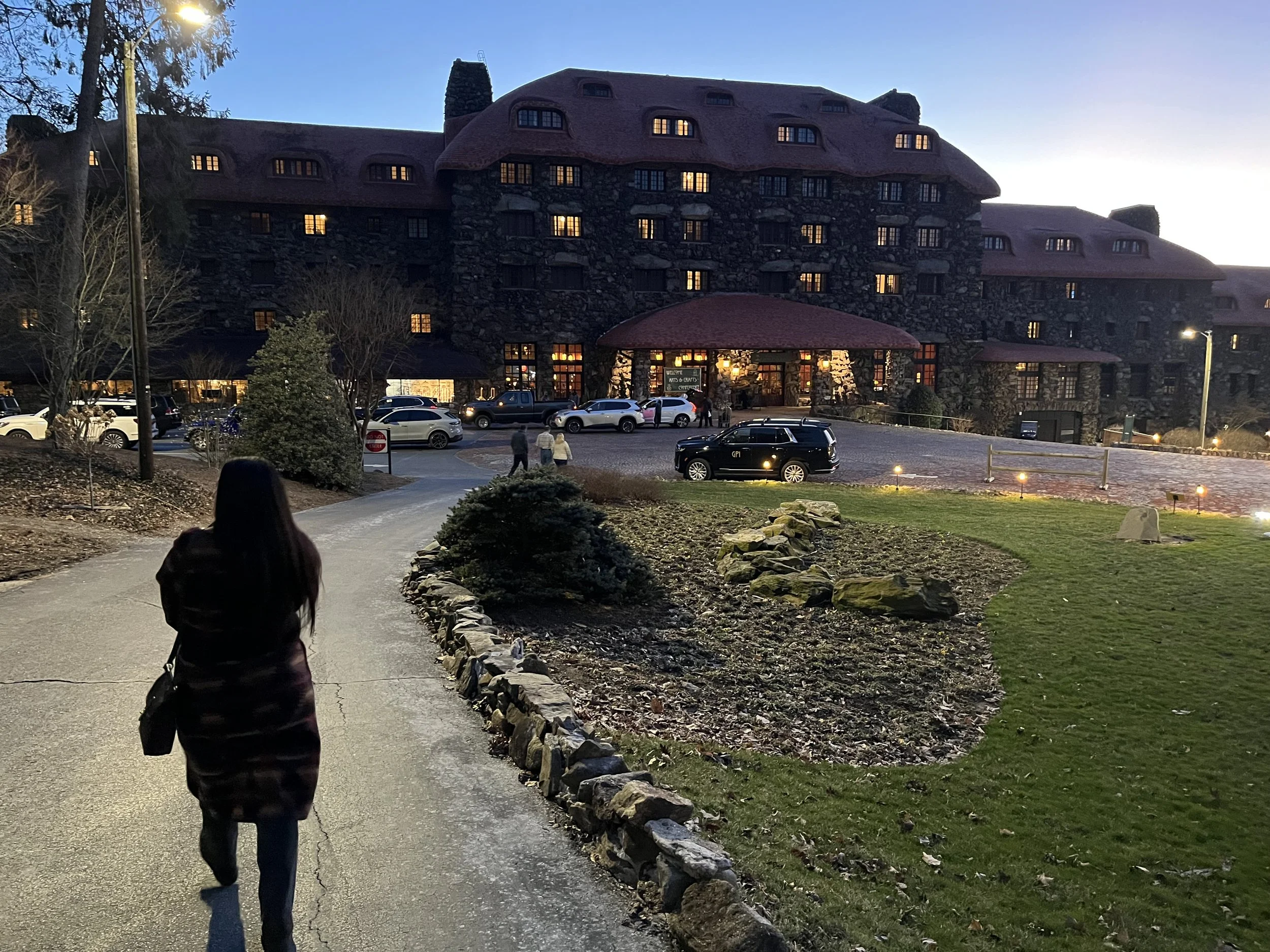
Sylvia and Dakota entering the Grove Park Inn for the 38th National Arts and Crafts Conference (February 2024)
A Vision Born from Simplicity and Integrity
At the turn of the 20th century, America and the rest of the world was changing fast. Factories were multiplying, cities were swelling, and mass production had begun to replace the human hand. Against that tide rose the Arts and Crafts movement (starting in England in the 1860’s)—a quiet rebellion that sought to restore dignity to honest labor and the simple beauty of handmade things.
When Edwin Wiley Grove, a self-made entrepreneur from Tennessee, envisioned building a world-class mountain resort, he wanted it to feel permanent, restorative, and authentic. He hired his son-in-law, Fred Loring Seely, to design and oversee construction. Seely’s vision was radical in its simplicity: use local materials, avoid ornamentation for its own sake, and let the craftsmanship speak for itself.
The result was breathtaking. Massive boulders were hauled from nearby Sunset Mountain, and hundreds of workers—many farmers and stonemasons—labored tirelessly to erect the structure in just under a year. Each stone, each beam, and each piece of furniture reflected the Arts and Crafts ethos: honest materials, human skill, and timeless beauty.
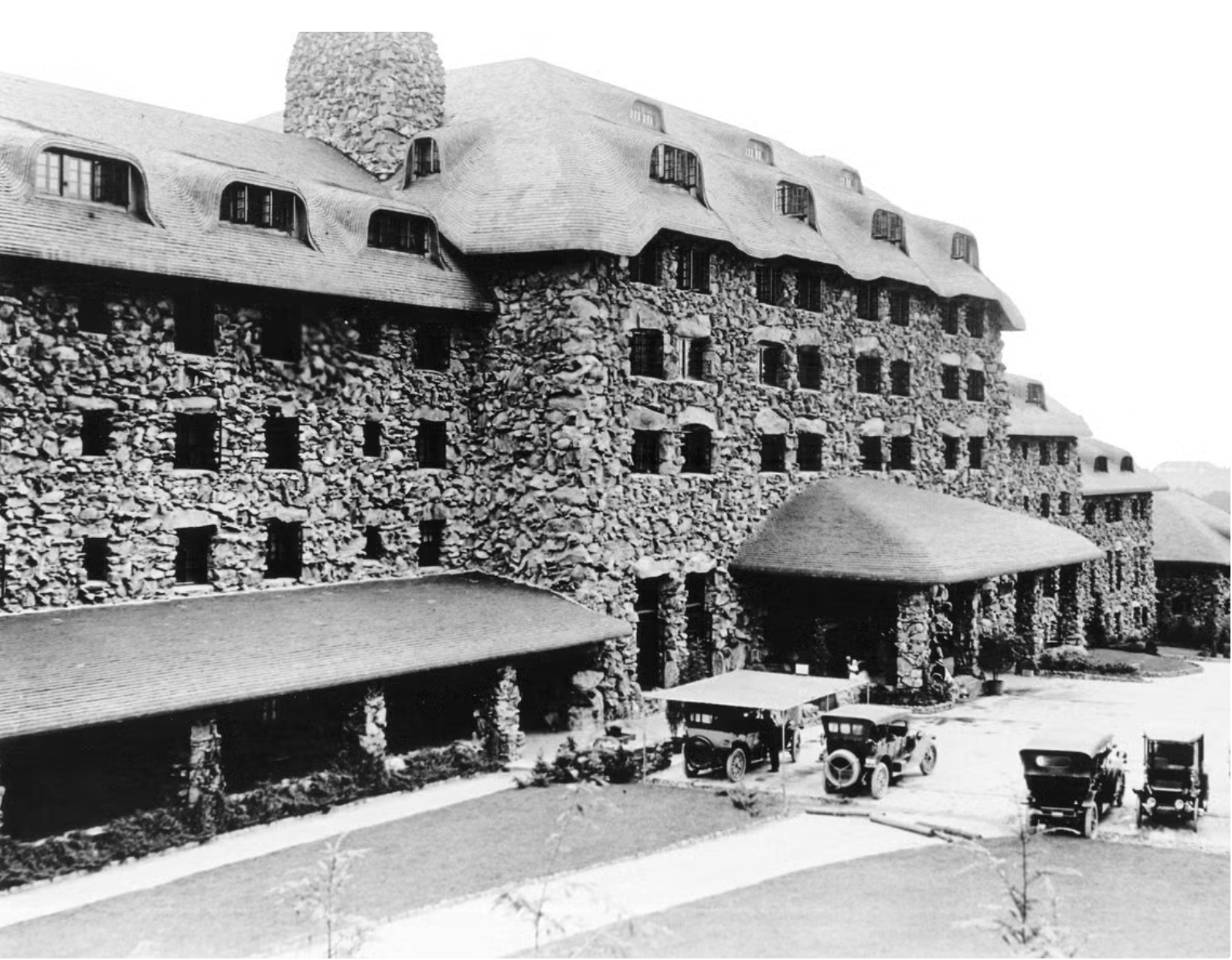
Grove Park Inn 1913
Enter the Roycrofters: America’s Artistic Workshop
To furnish his mountain masterpiece, Seely turned to one of the most respected names in American craftsmanship—the Roycroft Shops of East Aurora, New York. Founded by Elbert Hubbard in 1895, Roycroft was more than a workshop; it was a social experiment in creativity, ethics, and community.
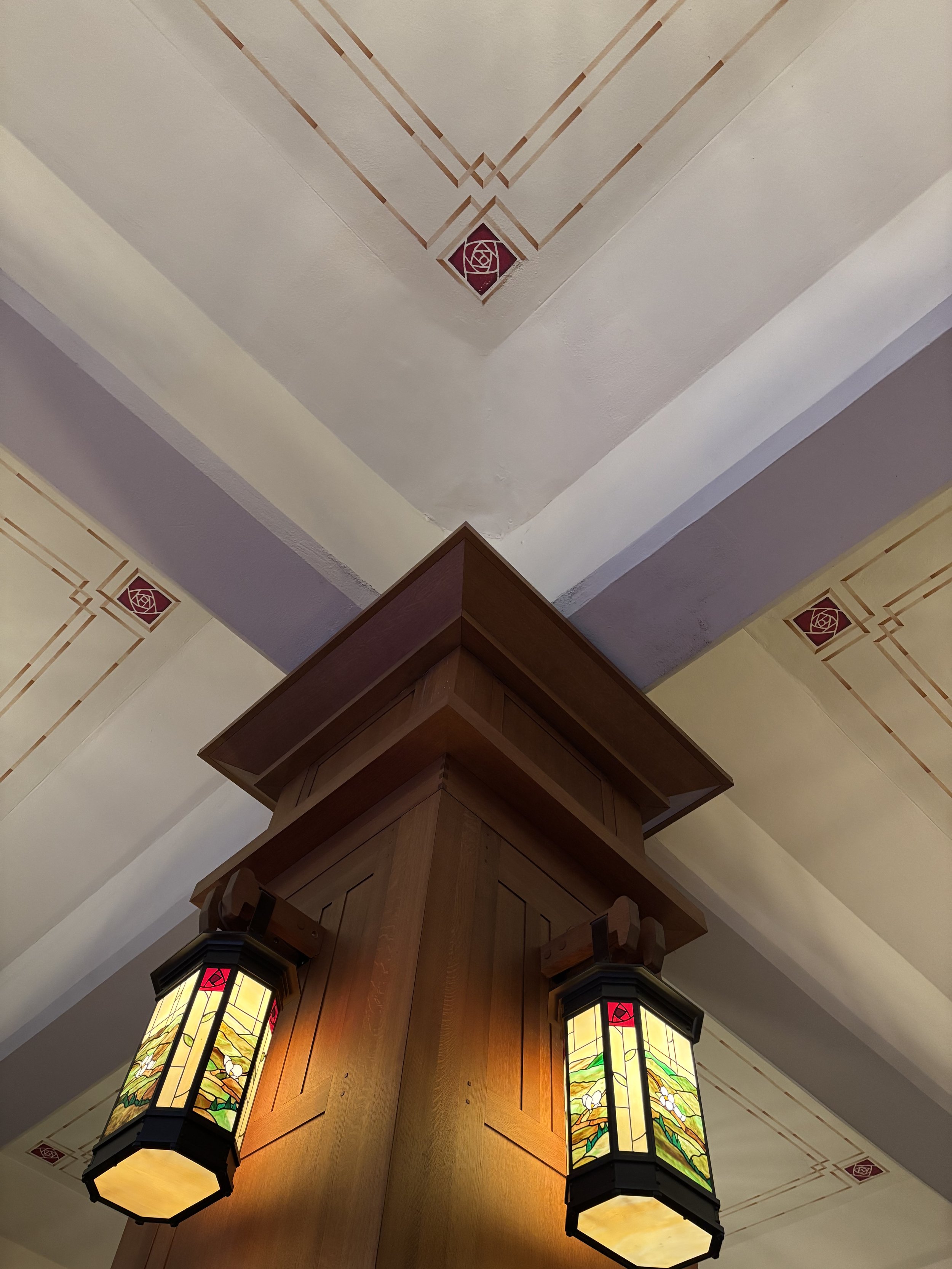
Roycroft light and art work in the lobby of the Grove Park Inn. Featuring the Dard Hunter Rose
Hubbard, a former traveling salesman for the Larkin Soap Company, was inspired by a visit to England’s Kelmscott Press, founded by William Morris—the spiritual father of the Arts and Crafts movement. Upon returning home, Hubbard established the Roycroft Press, producing beautifully hand-printed books that celebrated simplicity and truth. From there, the enterprise grew into a full-fledged art colony, where artisans worked in metal, leather, glass, and wood under the motto "Head, Heart, and Hand."
When the Grove Park Inn was being built, Hubbard’s Roycrofters were at the height of their influence. Their furniture—often made from quarter-sawn oak and marked with the Roycroft orb and cross—was known for its sturdy joinery, clean lines, and deep fumed finishes. The Roycroft Shops supplied the hotel with over 1,200 pieces of furniture and lighting, helping turn its interiors into a cohesive statement of purpose and design.
The Hotel as a Symbol of the Movement
Every detail of the Grove Park Inn reflected the ideals that Hubbard and Stickley preached. The great hall’s twin fireplaces—each large enough to stand inside—were built by hand from mountain granite. Massive exposed beams crossed the ceiling, each one left rough-hewn to show the tool marks of the craftsman. Electric fixtures were hand-hammered copper; the chairs and settles bore honest joinery and a warm patina that only comes from real wood and real work.
Even the layout of the rooms carried symbolic weight. Unlike the ornate hotels of the Gilded Age, with their heavy draperies and gilded ceilings, the Grove Park Inn was meant to calm the mind. The focus was on proportion, texture, and natural materials—principles still central to the Arts and Crafts style today.
Guests of the early Grove Park Inn included Thomas Edison, Henry Ford, F. Scott Fitzgerald, and John D. Rockefeller. Many came for the crisp mountain air and the therapeutic hot springs nearby, but all found themselves surrounded by a world where design and philosophy met. The hotel wasn’t just a place to stay—it was a place to think.
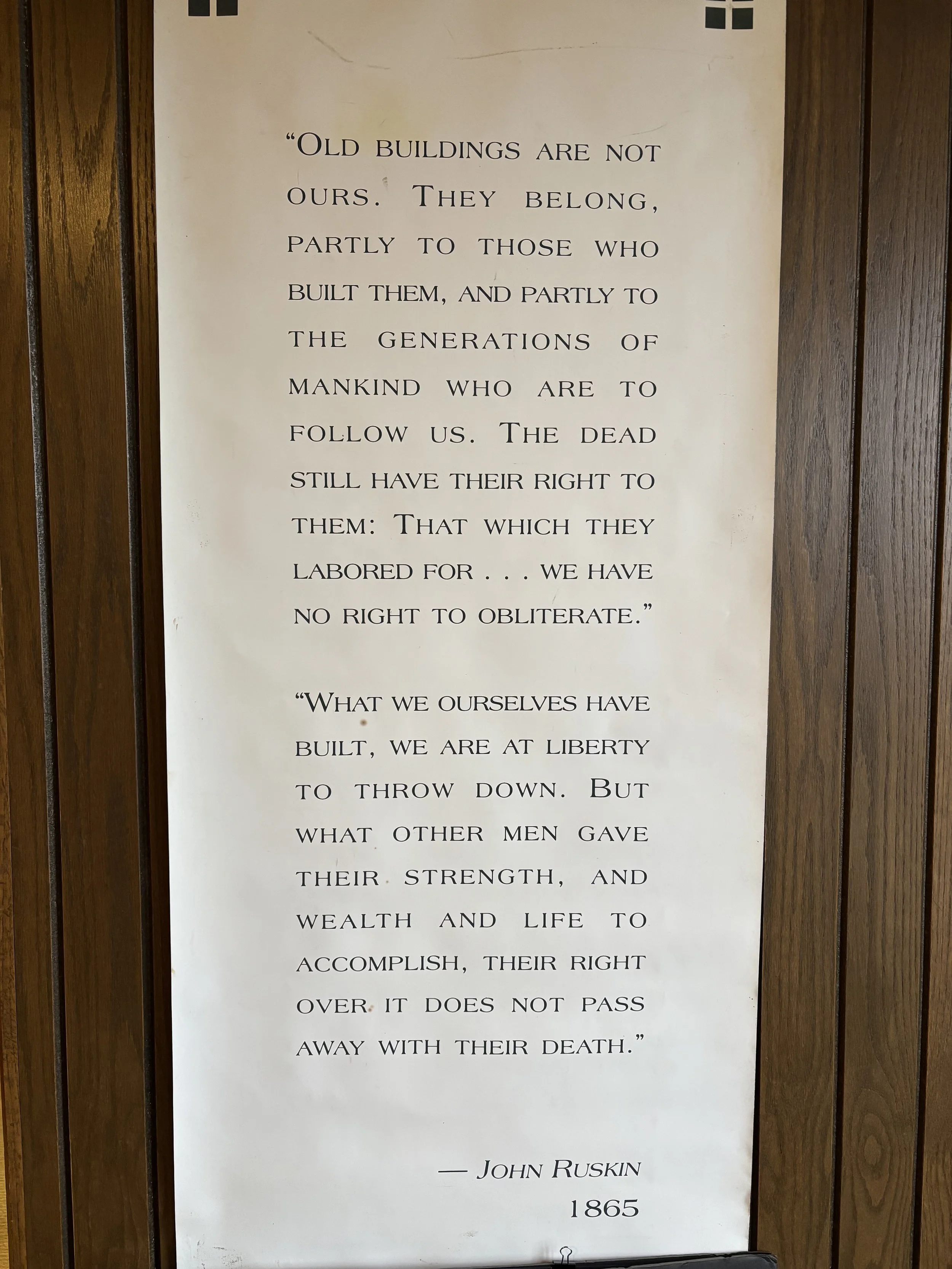
John Ruskin quote, founding thought leader of the Arts and Crafts Movement.
Roycroft’s Legacy Inside the Grove Park Inn
The Roycroft mark still appears on furniture and lighting fixtures scattered throughout the Inn. Many of these pieces are still in daily use—proof that handcrafted work, when done with care, can outlast generations. The oak settles in the lobby, the copper sconces on the walls, and the sturdy writing desks in the guest rooms remain a testament to the Roycrofters’ devotion to functional beauty.
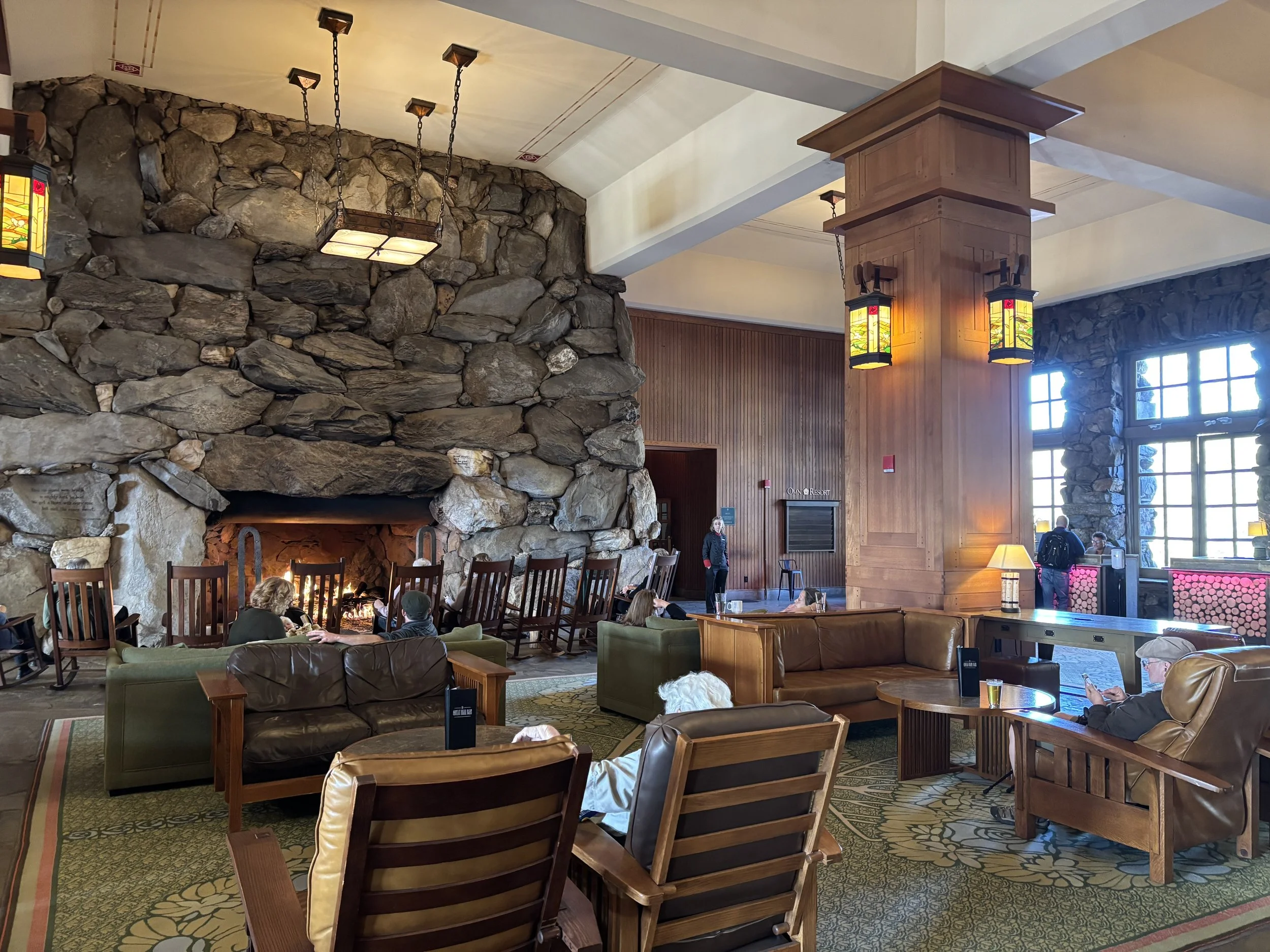
Main lobby of the Grove Park Inn
While time has added patina to the wood and metal, it’s also added meaning. Visitors today—many of them collectors, woodworkers, or simply admirers of design with soul—can sit in the same chairs that once cradled early 20th-century visionaries and feel the continuity of a movement that refused to compromise.
The Grove Park Inn is more than a museum piece; it’s a living artifact, one that proves the values of craftsmanship and integrity can survive the rise and fall of trends. It is, in every sense, a cathedral of the hand-made.
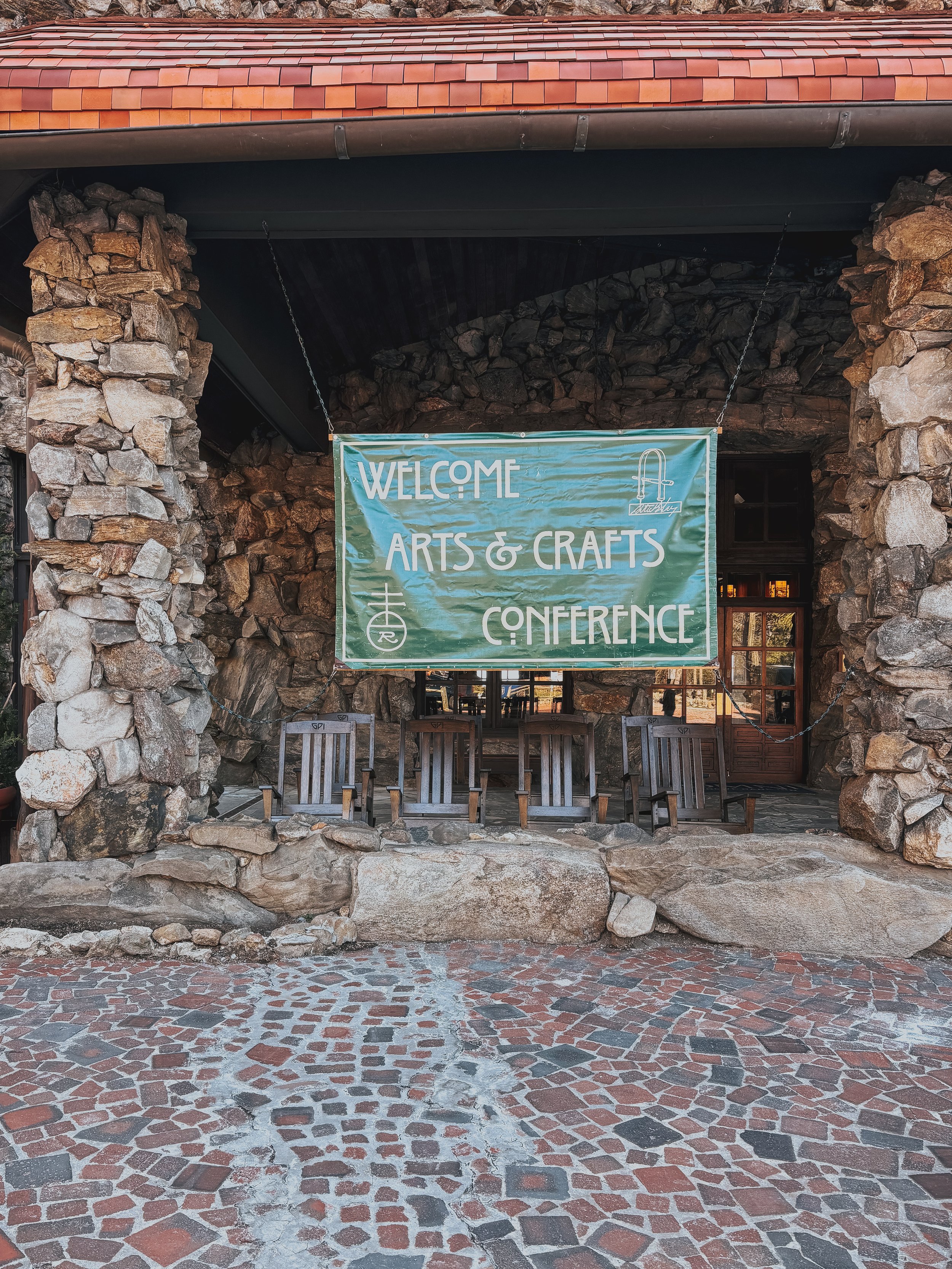
Entrance to the Grove Park Inn during the Arts and Crafts Conference (2024)
The Arts and Crafts Revival: Then and Now
In recent years, the Grove Park Inn has become a pilgrimage site for collectors and admirers of Arts and Crafts furniture, thanks in large part to the National Arts and Crafts Conference, held there annually since 1988. Each February, artisans, historians, and enthusiasts gather beneath the inn’s massive beams to trade knowledge, share restoration techniques, and celebrate the enduring relevance of the movement.
For many, it’s a spiritual experience. To walk through the halls surrounded by Stickley tables, Limbert chairs, and Roycroft lamps is to see how the ideals of simplicity and craftsmanship continue to resonate in our modern, disposable age.
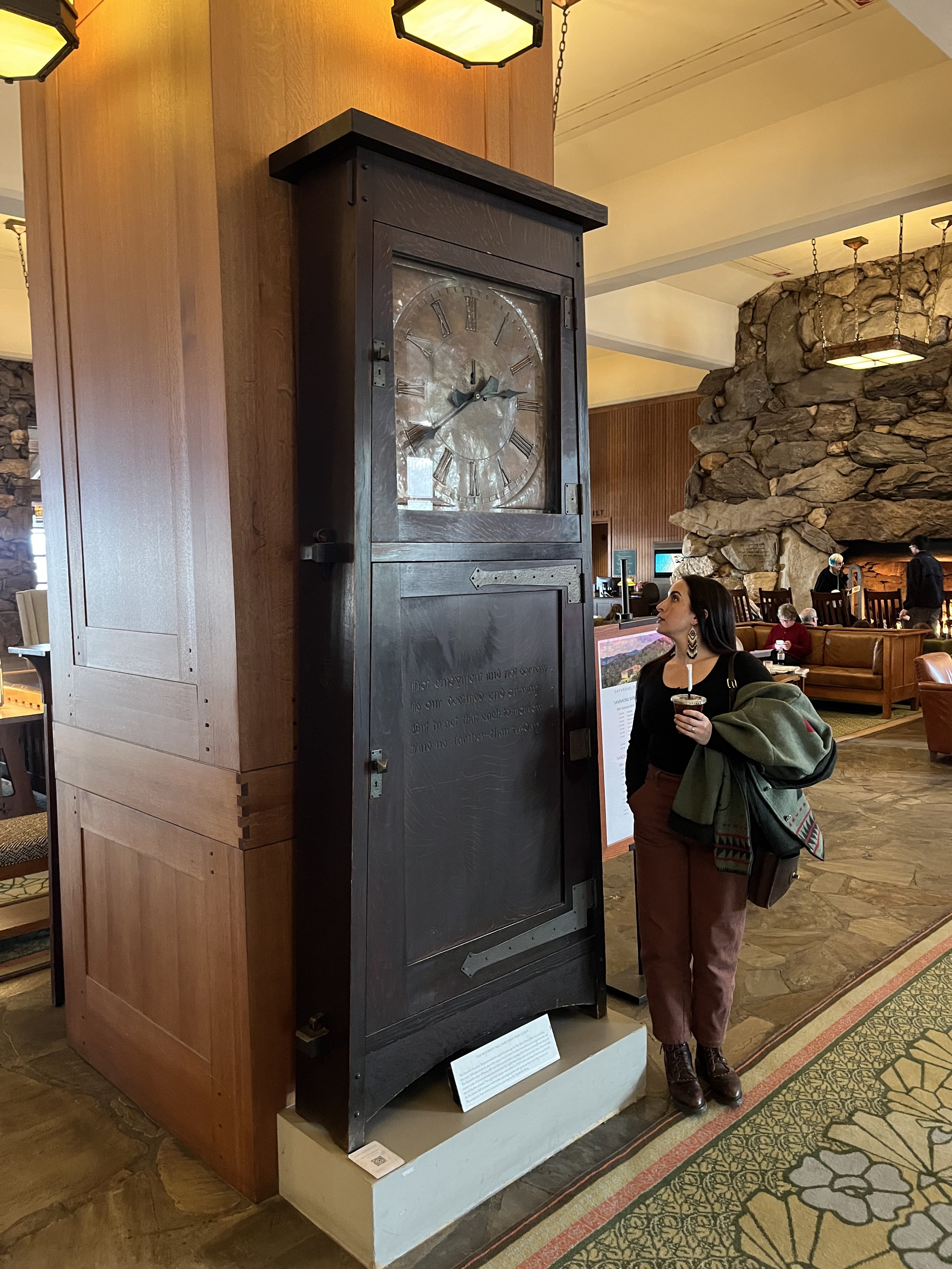
Rocroft Grandfather clock (Cir. 1913) in the lobby of the Grove Park Inn.
At Euro Classics Antiques, we often say that the Arts and Crafts movement wasn’t just about furniture—it was about a philosophy of living. The Grove Park Inn remains a perfect embodiment of that truth: a reminder that honest work, natural materials, and thoughtful design can create something more lasting than fashion—they create meaning.
A Quiet Rebellion that Still Speaks
Over a century after the first guests checked in, the Grove Park Inn still stands as a beacon of American craftsmanship. It tells a story of people over machines, quality over quantity, and integrity over ornamentation. It’s a story that echoes in every mortise and tenon joint, every hand-hammered copper lamp, and every soft creak of oak underfoot.
The Arts and Crafts movement asked us to slow down, to see beauty in the everyday, and to value the hands that make. In an age of mass production and digital distraction, that message feels more urgent than ever.
So whether you’re standing in the great hall at the Grove Park Inn, or in our showroom surrounded by Gustav Stickley, Limbert, and Roycroft originals, you’re part of that same quiet rebellion—a movement that never really ended, only evolved.